Competence Offering
Audio
Sasken's audio offerings cater to a diverse clientele, including consumer electronics manufacturers, automotive companies, telecom providers, and safety sectors. From smartphones to safety devices, Sasken's expertise in audio design, testing, and integration delivers tailored solutions across various industries.
Overview
Why choose Sasken for audio design?
Sasken delivers more than audio design. We provide end-to-end audio engineering solutions combining acoustics, hardware, and software to ensure high-performance sound in real-world conditions.
Sasken ensures that audio is engineered as a core system capability, enabling reliable performance and superior user experience.
Key benefits include:
- Proven expertise in audio design, testing, and validation across industries
- Faster development cycles through integrated design and simulation
- Superior audio quality through optimized acoustics, DSP, and system-level tuning
- Robust performance validated in real-world and extreme environments
- End-to-end capability from concept and design to testing and production
- Seamless integration with electronics, mechanics, and system architecture
Core Expertise
Core expertise
Our audio solutions combine acoustics, electronics, and software to deliver optimized performance across use cases.
Core competencies include:
- Acoustic design and enclosure optimization
- Audio DSP architecture and algorithm development
- Microphone and speaker system design
- Multi-microphone arrays and beamforming
- Voice processing (echo cancellation, noise reduction)
- Audio performance tuning and validation
Optimization
Performance and optimization
High-quality audio depends on precise signal processing and tuning.
Key focus areas:
- Advanced DSP algorithms for improved clarity and intelligibility
- Noise reduction and echo cancellation for better voice quality in noisy environments
- Dynamic range and loudness optimization for a consistent listening experience
- Latency optimization for reliable real-time performance
System Design
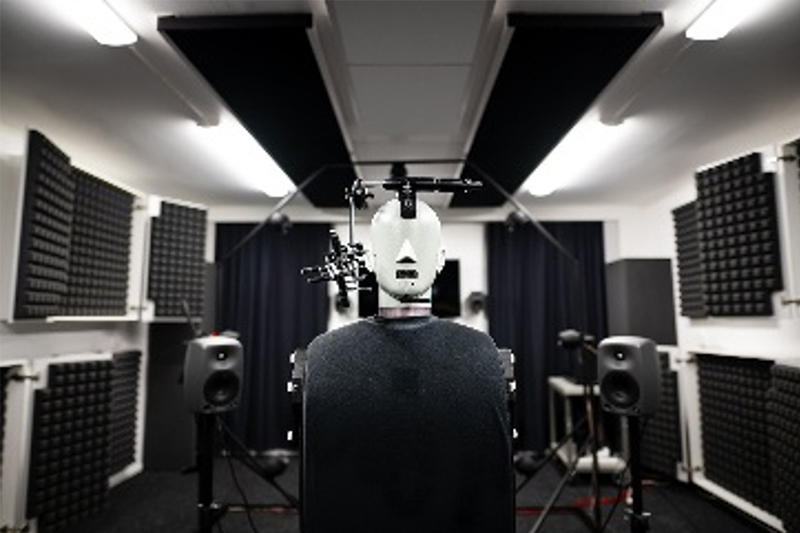
Acoustic design and system integration
Audio performance is heavily influenced by mechanical design and system constraints.
Customer benefits:
- Optimized acoustic performance — better sound quality without increasing footprint
- Reduced design risks — enclosure and component interactions addressed early
- Consistent performance — stable results across different environments
- Faster development cycles — fewer late-stage tuning iterations
Practical implementation:
- Acoustic modeling and simulation
- Speaker enclosure and port design
- Microphone placement and isolation strategies
- Integration with industrial design and mechanics
Deep Dive
Advanced capabilities
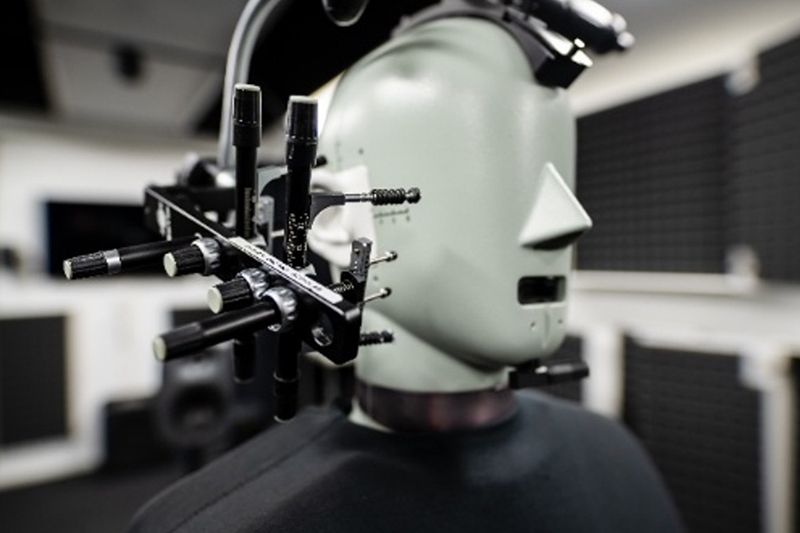
Reliable voice capture is critical in modern connected devices.
Design focus areas:
- Far-field voice capture and wake-word performance
- Beamforming and microphone array optimization
- Robust speech intelligibility in noisy environments
- Integration with voice assistants and communication systems
Collaboration
Collaboration in product development
Audio is tightly linked to overall product experience and system performance.
Our operating model:
- Close collaboration with hardware, software, and UX teams
- Iterative tuning and validation — continuous improvement
- Fast prototyping and listening tests — rapid feedback loops
- Transparent documentation — traceability and knowledge transfer
Laboratories
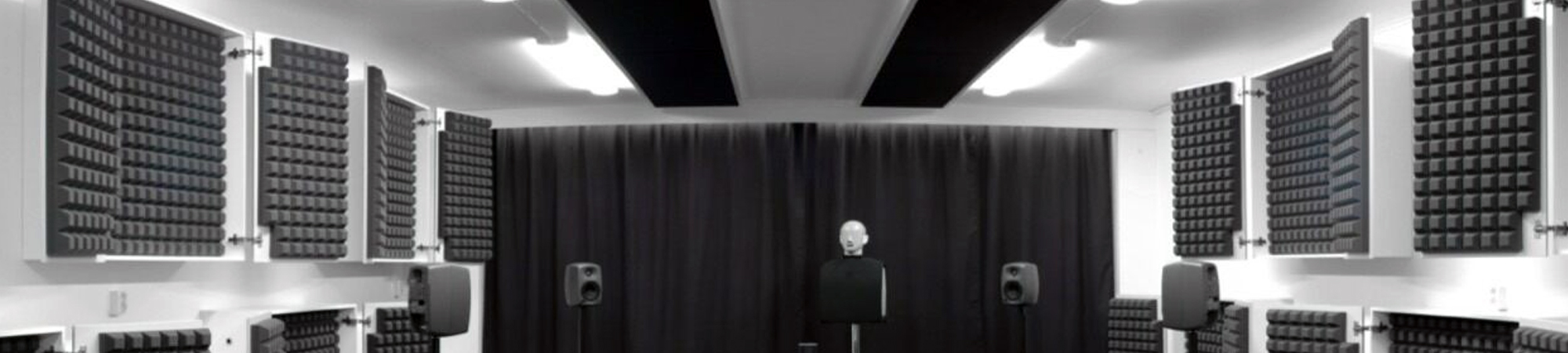
Our audio laboratory in Kaustinen
Repeatable audio results need a controlled room, a calibrated signal chain, and the discipline to keep both traceable. Our facilities have been built up over decades of device programmes — from single transducers to full voice-assistant systems.
Listening Room
A variable-acoustics room for controlled listening tests and sound-field measurements. Reverberation time is adjustable, so the same device can be characterised in a damped studio or a live living room without leaving the lab.
- Dimensions
- 8 × 5 × 2.6 m
- Reverberation time
- 400 ms – 1.5 s+
- Background noise
- Meets ETSI specifications
- Sound field
- Vertical & horizontal generation
Anechoic Chamber
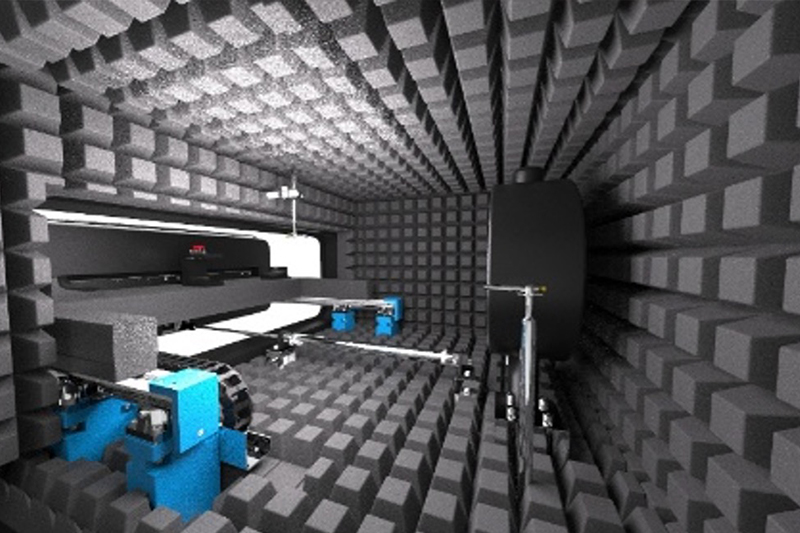
A free-field environment for transducer characterisation and directivity work, where the room contributes nothing to the measurement. This is where speaker and microphone performance is separated from enclosure and room effects.
- Compliance
- ISO 3745:2003
- Cut-off frequency
- 250 Hz
- Primary use
- Transducer performance
- Typical work
- Frequency response, directivity
Multi-channel capture chain
A calibrated, balanced signal path from microphone to file. Multi-channel capture at studio resolution is what makes microphone beamforming and array directivity measurable rather than estimated.
- Analog inputs
- 8 balanced
- Sample rate
- 96 kHz
- Bit depth
- 24-bit
- Enables
- Microphone beamforming
Standards & Certification
Standardised testing and pre-certification
We test against global benchmarks rather than in-house opinion, so results hold up in front of an operator, a certification body, or a voice-assistant programme.
Pre-certification in our own lab surfaces the failures early — while a firmware or acoustic change is still cheap — instead of at the certification house.
What we measure:
- Call quality and speech intelligibility
- Noise performance and active noise cancellation
- Music playback quality and loudness
- Microphone beamforming and array directivity
- Voice assistant and wake-word functionality
- Environmental testing across temperature and humidity
Standards and benchmarks
Objective speech-quality scoring and standardised noise conditions, so a result is comparable between labs, revisions, and competitors.
- PESQ
- POLQA
- 3GPP
- ITU-T
- ETSI TS 103 224
- ETSI ES 202 396-1
- ITU-T P.50 babble
- ANSI S12.2 HOTH
- ISO 3745
Pre-certification
Voice assistant readiness
Assistant programmes have their own acoustic requirements, and a device that passes telephony testing can still fail them. We run environmental and pre-certification testing against those requirements before the formal submission.
- Amazon Alexa
- Google Assistant
- Apple Siri
- Custom speech recognition
Device types we characterise:
- Headsets and true-wireless earbuds
- Smart speakers and voice front-ends
- Mobile phones and tablets
- Wearables and wireless devices
Applications
Where our audio work is applied
Sound quality is a product requirement wherever a person has to hear, or be heard, reliably.
Consumer electronics
From headphones and smart speakers to smartphones and wearables — superior sound performance in the device the user actually holds.
Automotive
In-car audio systems, hands-free communication, and noise control that keep speech clear at motorway speed.
Telecommunications
Mobile phones, VoIP devices, and conferencing systems tested and optimised for compliance with ETSI and 3GPP requirements.
Industrial and safety
Public address systems, safety alarms, intercoms, and specialised industrial communication equipment, where intelligibility is a safety requirement.
Research and development
Our anechoic chamber and listening room are available to researchers and product teams who need to analyse and verify a design in a controlled environment.
Not on the list?
Most audio problems we are handed are ones nobody has written a standard for yet. Describe the symptom and we will tell you how we would measure it.
Tools & Tech
Tools and technologies
Our instrumentation is the reference-grade equipment used by the certification houses themselves — which is why a result measured here is a result that transfers.
The same chain covers the whole loop: characterise the device, simulate the network or noise environment it will live in, tune the DSP, and measure again against the specification.
Measurement and analysis
- Audio Precision AP-2722 audio analyzer
- HEAD acoustics measurement system
- Acoustic modelling and simulation tools
Artificial heads and microphones
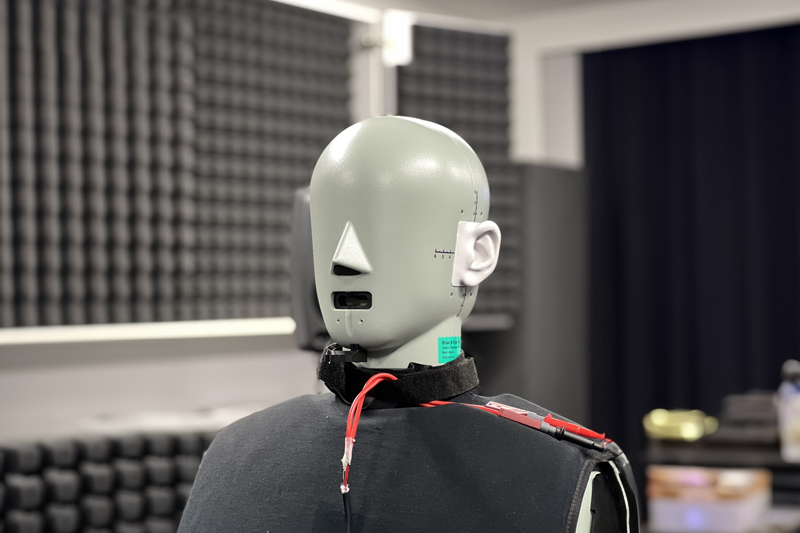
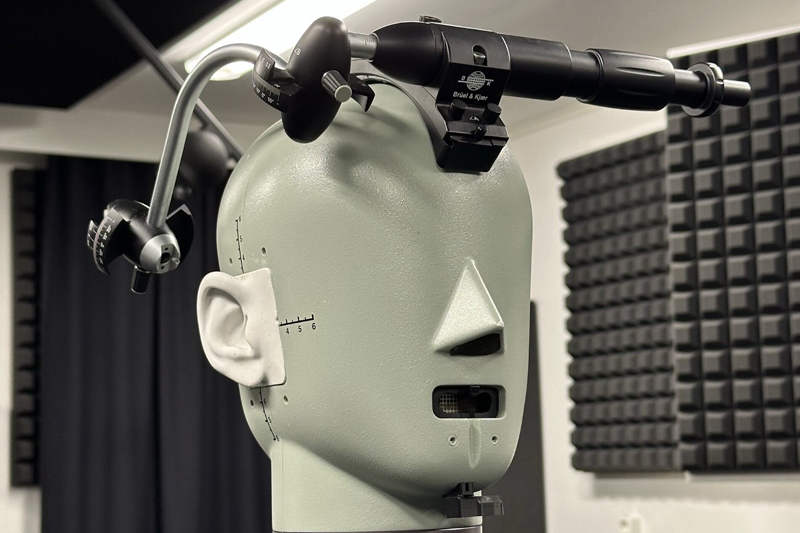
- Brüel & Kjær HATS (head and torso simulator)
- B&K 4190 free-field microphone
- B&K 4192 pressure-field microphone
Recording and conversion
- RME Hammerfall Multiface II sound card
- RME ADI-8 DS AD/DA converter
- Adobe Audition for audio processing and editing
Network simulation
Communication devices are measured over a simulated network, so call-quality results reflect the conditions the device will actually meet.
- Rohde & Schwarz CMW500
- Rohde & Schwarz CMU-200
Tuning and DSP
Audio tuning for smartphones, tablets, and wearables — optimising hardware, software, and DSP together rather than in isolation.
- Cirrus Logic WISCE™ tuning suite
- Multiband DRC, equalisers, and ANC
- Multi-microphone beamforming algorithms
Problems we are handed
- Ingress protection (IP) rating fighting audio quality
- Echo cancellation failing in harsh environments
- Distortion at target loudness
- Beamforming that works on the bench, not in the product
In-house Platform
SeviQ Trace — microphone array directivity and device audio quality
Multi-channel audio measurement usually means stitching together a stimulus generator, an audio interface, a spreadsheet, and a great deal of manual bookkeeping — and the bookkeeping is what fails first. SeviQ Trace is our own measurement platform: it drives the speaker array, records the device under test, analyses the result, and produces the PDF report, with every session indexed and searchable afterwards.
Why it matters to a customer:
- Levels are absolute dB SPL, not relative — results compare across sessions, rigs, and revisions
- Measurements are repeatable by construction — capture settings and analysis windows travel with the session
- Device logs are captured alongside the audio, tying an acoustic symptom to what the device was doing
- Any past result is findable by device, software version, region, project, or operator
6 modes
One workflow
Voice-Call Polar, Handset and IHF, Video-Recording Polar, Guided, and custom test bundles defined for a specific programme.
360°
Polar directivity
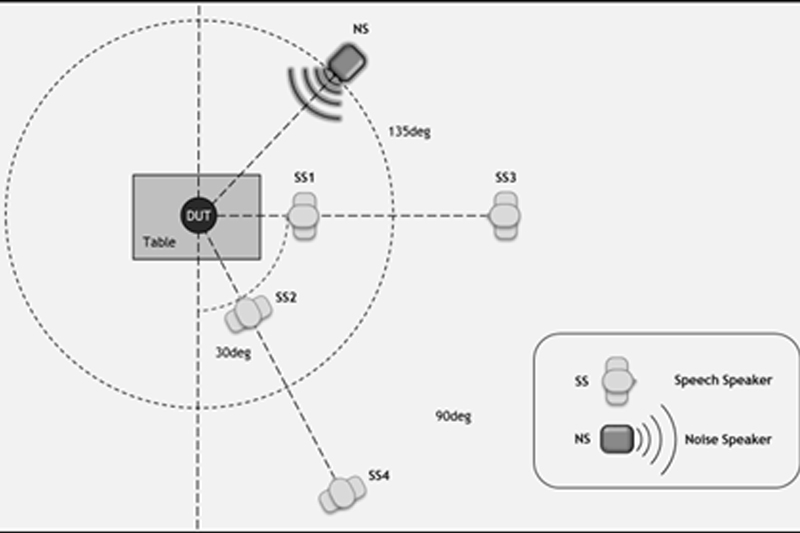
Up to eight output speakers arranged around the device under test, driven over ASIO, WASAPI, or MME interfaces.
3 views
Per test, per window
Frequency response, directivity, and time domain — each selectable for every test and every analysis window.
End-to-end
Calibrate → measure → analyse → review → report
Five stages, one tool, one audit trail.
-
01
Calibrate
- Speaker levels calibrated to absolute dB SPL, so a target level means the same thing on every rig
- Output global trim plus per-channel offsets, stored per machine
- A central library of 48 kHz speech and noise signals, shared by every mode
- Standardised noise conditions: pink, white, babble (ITU-T P.50), HOTH (ANSI S12.2), car, and traffic
-
02
Measure
- Pick a mode and a device, configure the speaker and signal schedule, run the capture
- Up to eight output speakers around the device under test for full 360° polar sweeps
- Multi-channel playback and recording through any ASIO, WASAPI, or MME interface
-
03
Analyse
- Recordings split into segments — ambient, speech, noise, speech+noise
- Each segment carries its own lead and trail trim, so analysis covers exactly the samples that matter
- FFT parameters set per analysis window rather than once for the whole session
-
04
Review
- Frequency response, directivity (polar), and time domain in one place
- Interactive, zoomable plots with several sessions overlaid for direct comparison
- Any plot type selectable per test and per analysis window
-
05
Report
- PDF report with a cover page and full session information — operators, device, region, project
- Frequency-response, directivity, and time-domain pages included
- Every session indexed and searchable afterwards by device, model, serial, software version, region, project, operator, mode, and date
Searchable session history
Every measurement is indexed, so a result from six months and three firmware builds ago is still one query away.
Device log alongside the audio
Android device logs stream into the session and are stored with the recordings — acoustic behaviour and device behaviour on the same timeline.
Roles that match the lab
Operators run a simplified, mostly read-only workflow; test definitions and analysis windows stay under administrator control.
Multi-channel capture, interactive results, and reports your own quality team can read — from one platform we build and maintain ourselves, and can extend to the tests your programme actually needs.
Request a demo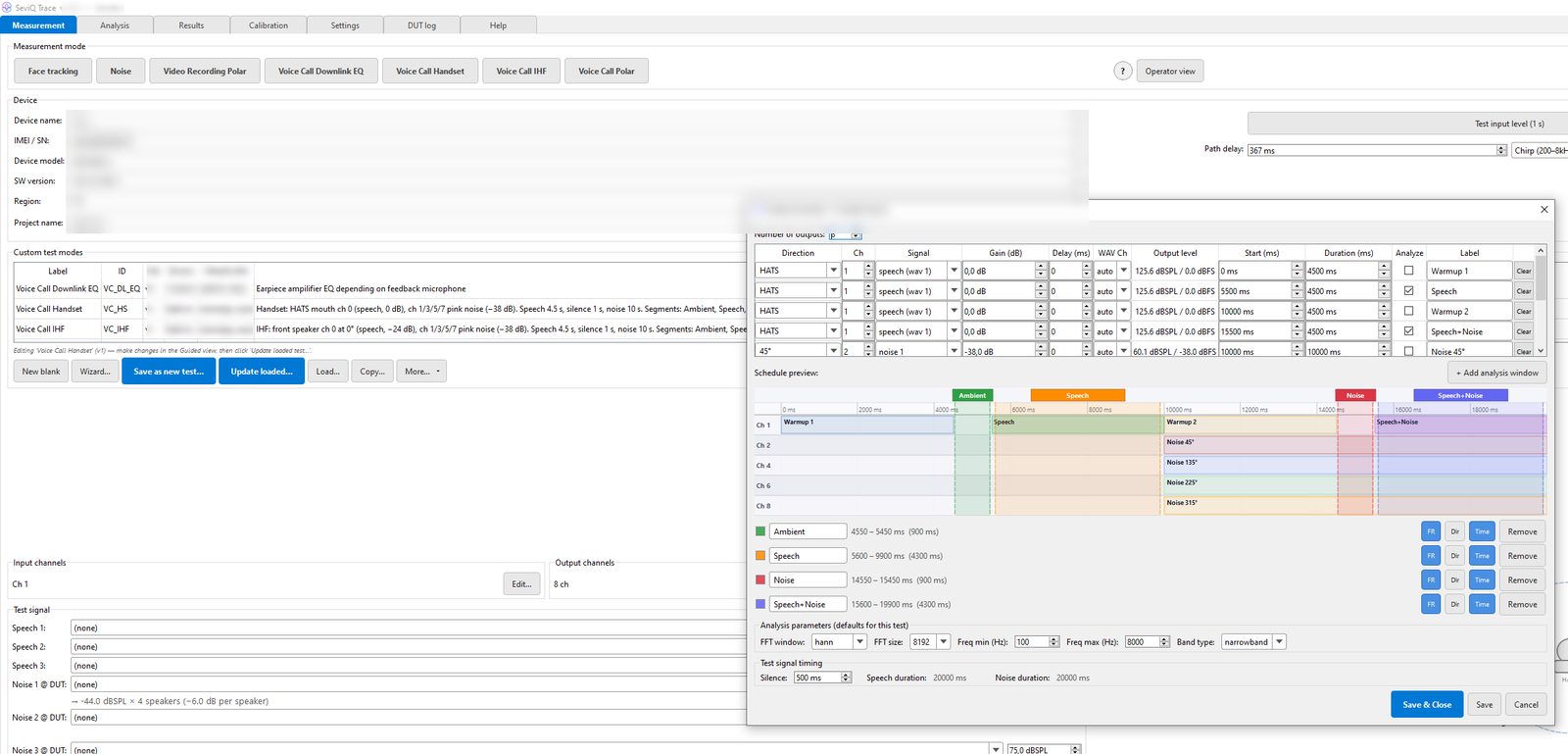
Customer Outcome
Customer outcome
Sasken’s audio solutions deliver measurable value across the product lifecycle:
High-quality audio experience
Better end-user satisfaction
Faster time-to-market
Reduced tuning and iteration cycles
Lower development risk
Predictable performance
Optimized system integration
Audio works seamlessly with the device
Long-term reliability
Consistent performance across usage scenarios
Have any Business Enquiries?
Got an idea you can't shake? Let's turn it into thriving business together.